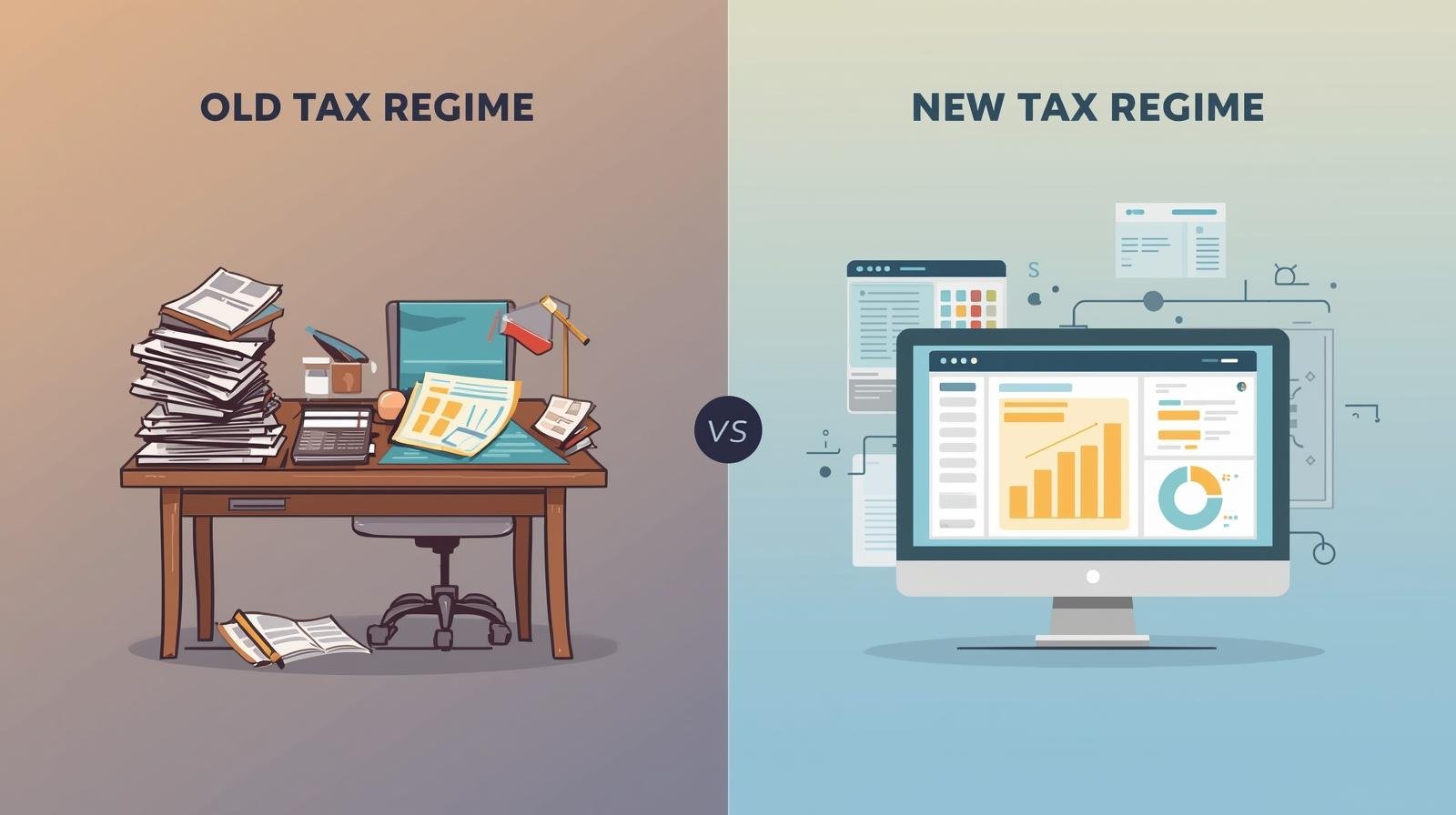
Every year between January to March, salaried employees across India rush to submit investment proofs to their HR departments. LIC premium receipts, PPF statements, health insurance bills, rent receipts everything is compiled in haste to reduce tax liability.
However, with the New Tax Regime now being the default regime, a critical question arises:
Are these investment proofs still useful, or are you investing blindly without any tax benefit?
Why Investment Proof Submission is Still Asked by HR
Despite major tax reforms, most payroll systems continue to follow legacy processes. As a result:
- HR teams still request investment proof submission F.Y. 2025-26
- Employees assume deductions will automatically apply
- Regime selection is often ignored or misunderstood
👉 The reality: If you are under the New Tax Regime, most proofs are irrelevant.
Understanding the New Tax Regime (Default Option)
From FY 2023–24 onwards, the New Tax Regime became the default regime for salaried taxpayers.
Key Features of the New Tax Regime:
- Lower tax slab rates
- No need for forced tax-saving investments
- Limited deductions and exemptions allowed
- Simplified compliance and higher monthly take-home salary
Deductions Allowed Under the New Regime:
- Standard Deduction (₹75,000 for FY 2025–26)
- Employer’s contribution to NPS (Section 80CCD(2))
- Family pension deduction (limited cases)
Why Your Jan–March Investments May Be Worthless
If your salary is taxed under the New Tax Regime, the following do not provide any tax benefit, even if proofs are submitted:
Common Disallowed Deductions:
- Section 80C (LIC, PPF, ELSS, NSC, Tuition Fees)
- Section 80D (Health Insurance Premium)
- HRA exemption
- LTA exemption
- Home loan principal (80C) and interest (Section 24)
- Children’s education allowance and other salary exemptions
🔴 Result:
Money invested purely for tax saving—but zero tax reduction.
This is why many employees feel cheated after investing heavily in March.
Old vs New Tax Regime: Which One Should You Choose?
Choosing the right regime before January payroll cutoff is crucial.
Choose the Old Tax Regime if:
- Your total deductions exceed 4-5 lakhs
- You claim:
- HRA
- Home loan interest
- 80C + 80D benefits
- You already have long-term financial commitments
- You are comfortable with documentation and proof submission
Choose the New Tax Regime if:
- You prefer simplicity and higher in-hand salary
- You do not want forced year-end investments
- Your deductions are minimal.
- You want flexibility in financial planning
Decision Matrix: Old vs New Tax Regime (FY 2025–26)
| Factor | Old Regime | New Regime |
| Tax Slabs | Higher | Lower |
| Deductions | Allowed | Mostly Not Allowed |
| Proof Submission | Mandatory | Not Required |
| Compliance | Complex | Simple |
| Take-Home Salary | Lower | Higher |
Investment Proof Submission 2025: What You Should Actually Do
Before submitting any proofs, employees must:
- Confirm tax regime selected by HR (by Default New)
- Calculate tax under both regimes
- Avoid last-minute investments without clarity
- Align tax planning with long-term financial goals
🔍 Blind investments for proof submission often lead to:
- Liquidity issues
- Poor insurance products
- Locked-in funds with low returns
Switching Between Tax Regimes: Important Rules
For Salaried Employees:
- You can switch between Old and New Regime every financial year
- Intimation must be given to employer before payroll closure
For Business/Professional Income:
- Switching is restricted
- Form 10-IEA must be filed to opt out of the New Regime
- Once switched back to Old Regime, frequent changes are not allowed
Why Smart Tax Planning Must Start Before January
Most tax mistakes happen because planning starts too late.
Ideal Timeline:
- April–June: Regime comparison
- July–September: Investment alignment
- October–December: Course correction
- January–March: Only documentation, not fresh investments
📌 Tax planning done early:
- Improves cash flow
- Avoids panic investments
- Ensures optimal tax liability
Frequently Asked Questions (FAQs):
- Is the New Tax Regime compulsory for salaried employees?
No. The New Tax Regime is the default option, but salaried employees can choose the Old Tax Regime by informing their employer before the payroll cutoff.
- Do I need to submit investment proofs under the New Tax Regime?
No. Investment proof submission is not required under the New Tax Regime, as most deductions and exemptions are not allowed.
- Are LIC, PPF, and ELSS useful under the New Tax Regime?
No. Section 80C investments like LIC, PPF, and ELSS do not provide tax benefits under the New Tax Regime, though they may still serve financial goals.
- Is HRA exemption available in the New Tax Regime?
No. HRA exemption is not allowed under the New Tax Regime, even if rent receipts are submitted to HR.
- Which tax regime is better for salaried employees in FY 2025–26?
It depends on your total deductions.
- Old Regime is better if deductions exceed ₹3.5–4 lakh.
- New Regime is better for those with fewer investments and who prefer simplicity.
- Can I switch between Old and New Tax Regime every year?
Yes. Salaried individuals can switch tax regimes every financial year by informing their employer before tax computation.
- What is Form 10-IEA and who needs to file it?
Form 10-IEA is required mainly by taxpayers having business or professional income to opt out of the New Tax Regime.
- What happens if I submit investment proofs but remain in the New Tax Regime?
Your investments will be ignored for tax calculation, and no tax benefit will be granted, even if proofs are submitted.
- Why does HR still ask for investment proof submission in 2025?
Many organizations follow legacy payroll systems, so they continue to collect proofs even though they may not be applicable under the New Tax Regime.
- Should I invest in March only to save tax?
No. Last-minute investments often lead to poor financial decisions. Tax planning should be aligned with long-term financial goals, not just tax savings.